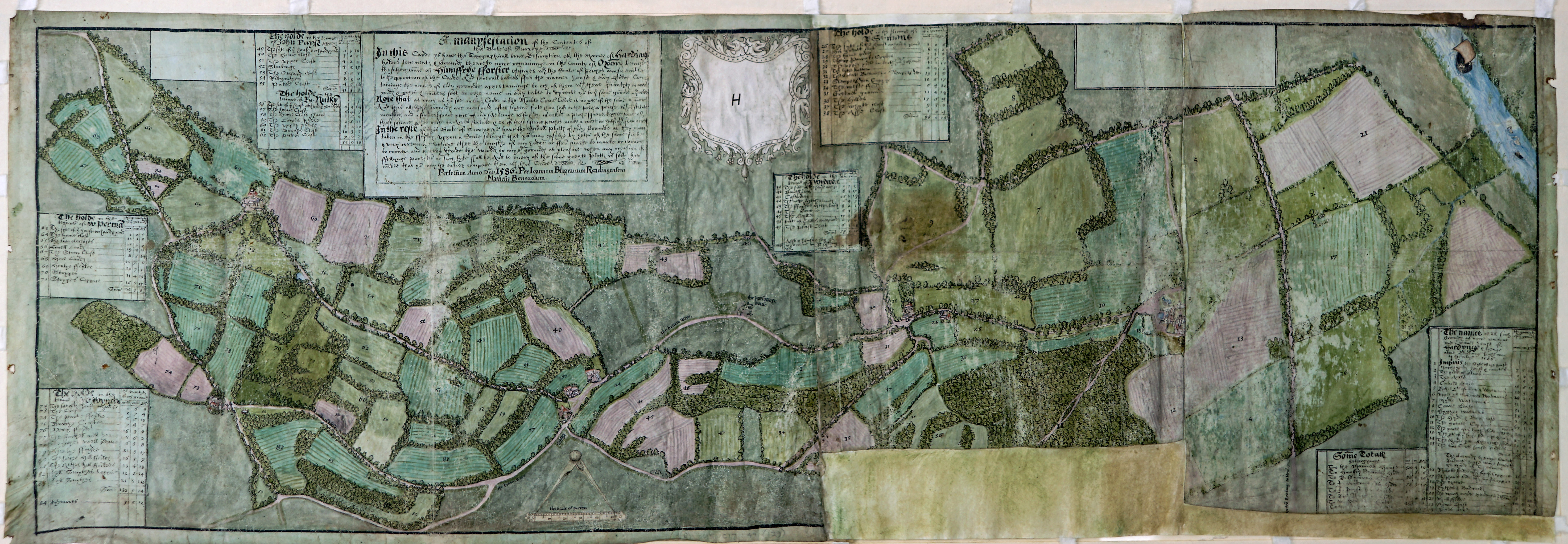
The Harpsden Map - MS C17:49
19 February 2021
Back in the days when interaction with both people and documents was a safe and relatively straightforward thing to do, I was preparing an item for an outreach event. It was a small map, hand drawn and coloured by John Blagrave in 1589 on a single membrane of vellum. The map is part of a solicitor’s collection deposited with the archives in the 1970s and is known as The Harpsden Map.
The Harpsden Map - MS C17:49
The cartographer, John Blagrave, was an interesting character: a well-known mathematician who studied at St John’s College, Oxford and lived in Reading. Although he never took his degree, he published several mathematical works, maps of both the land and the skies, designed and made instruments such as astrolabes and sundials, as well as practising as a land surveyor. He was among the first to draw estate maps to scale and the scale can be clearly seen on this map. He died in 1611.

Scale on the Harpsden Map
Harpsden is a small parish near Henley-on-Thames and at this time, it comprised of two manors; Bolney in the south and Harpsden in the north of the parish. In the 17th Century, both manors were consolidated into one but in the 16th Century the Harpsden Manor was owned by the Forster family. Their main residence was in Aldermaston and so the manor house and its desmesne (coloured pink on the map) were let to a tenant – named as Hardynge.
What makes this map so well-beloved by many of us who have worked in the archives is the small vignette in the corner, showing a section of the River Thames.

Vignette on the Harpsden Map
Two different kinds of river craft are depicted; a skiff or punt coming down from the shallower waters upriver and what could be a representation of a Thames Barge with its square reddish-brown sail; at this time, nearby Henley was the highest point on the river to which commercial barge traffic could navigate and it was an important and affluent inland port. Swimming serenely between the craft are two beautiful swans. Swans were luxury items at this time – a sign of wealth or nobility and ownership of them was carefully protected as were the swans themselves with hefty fines levied on anyone who harmed or molested them.
In those pre-toll road days the river was important and I believe this vignette, charming though it is, is really there to draw our attention to the fact that the Manor included a stretch of the Thames (and possibly even a game of swans) which must have been a valuable asset.
The vignette sparked a conversation with colleagues over the variety of ‘swans’ referenced in the collections held at the History Centre and this in turn led to colleagues racking their brains and me to go down the rabbit hole of Heritage Search and a key word search on ‘Swan’. The results are eclectic, from the prestige of swan ownership to the several hostelries across the county named for them and you might expect this, given the wide range of written and printed material pertaining to the county held at the History Centre but it’s a nice way to look at the diversity of our holdings.
Swans are often known in Britain as ‘the Royal bird’ and ownership of a game of swans has, as noted above, been carefully guarded. England has the most highly structured system of swan ownership; all unmarked mute swans on common water belong to the Crown, this was made law in the 1482 Swan Act which formalised the legislation for owning and marking swans. A swan mark (or a cigninota) is an individual pattern of scars or tattoo on a swan’s upper bill and is how ownership is demonstrated. In 1570, The Order of Swannes set out that if anyone tampered with a swan mark, they were liable for up to a year’s imprisonment. Legal cases relating to swans were heard at Swanmoots, held through the middle ages. The cost of owning your own swan mark was extremely high, far higher than the value of a swan as meat, and essentially only the crown and large landowners could buy such a mark. Swan Rolls were kept recording each mark and the names of the owner.
This vellum swan roll dates from 1753 and was deposited in 1937 as part of a small collection of family papers. It is inscribed to Sir Thomas Allen, Bart, of Lothingland, Suffolk and his mark is the 7th on the roll.

Vellum swan roll, 1753 - P145/MS/1
Sir Thomas Allen’s swans were in East Anglia rather than Oxfordshire, but Norman F Ticehurst’s Swan marks of Oxfordshire and Buckinghamshire published in the Oxfordshire Archaeological Society, Report no. 82 and pictured below gives details of the swan marks that were held in the county.

Page from: Swan marks of Oxfordshire and Buckinghamshire, 1936 - OV 943(OXF)
Ticehurst was a surgeon at the Royal East Sussex Hospital until the second world war when he also served as Medical Officer of the Normanhurst Military Hospital at Battle and later received the OBE for this service. He was a prominent ornithologist who did substantial research into the ownership of mute swans in England.
Amongst the many thousands of printed books about Oxfordshire in the History Centre’s collections, there is a wealth of topographical and social history to be found. More information about the habitat and habits of swans can be found in HR Robertson’s Life on the Upper Thames. This illustrated volume was published in 1875 and has two chapters devoted to swans with detailed descriptions of nests, habitats and customs as well as many other aspects of life on the river from London to its source. The book is beautifully illustrated with engravings made from original drawings by Henry Robert Robertson himself who was a member of the Royal Academy with specialities in landscapes, etchings and engravings.

Illustration from: H.R. Robertson’s Life on the Upper Thames, 1875 - SZ 931(ROB)
Swan Upping (or hopping as Robertson calls it) is a last remnant of the swanmoots. On page 160, Robertson describes the practice, explaining that the principal owners of swans on the River Thames are the Crown and two of the London Livery companies: the Vintner’s company and the Dyers’ company who had each held the right to own swans since the 15th Century.
Swan-hopping or Swan Upping is done annually, on the stretch of the Thames from Sunbury-on-Thames up to Abingdon and while today its main purpose is the conservation of swans on the river, traditionally it was the means of apportioning them between the three parties. Happily, these days swans are marked only by a ring around one of their legs; pinioning and marking are no longer practiced.
The illustration below of swan upping is by HR Robertson but there is also a lantern slide taken from it and two photographs of swan upping on the Thames that are taken from the Taunt Photographic Collection. This is a sizeable and important collection held by the History Centre of the work of Oxford photographer Henry Taunt (1842 – 1922) who documented Oxfordshire and the Thames-side counties from the 1860s onwards. Taunt's work can be explored in Picture Oxon.

H.R. Robertson’s Swan Hopping - SZ 931(ROB)
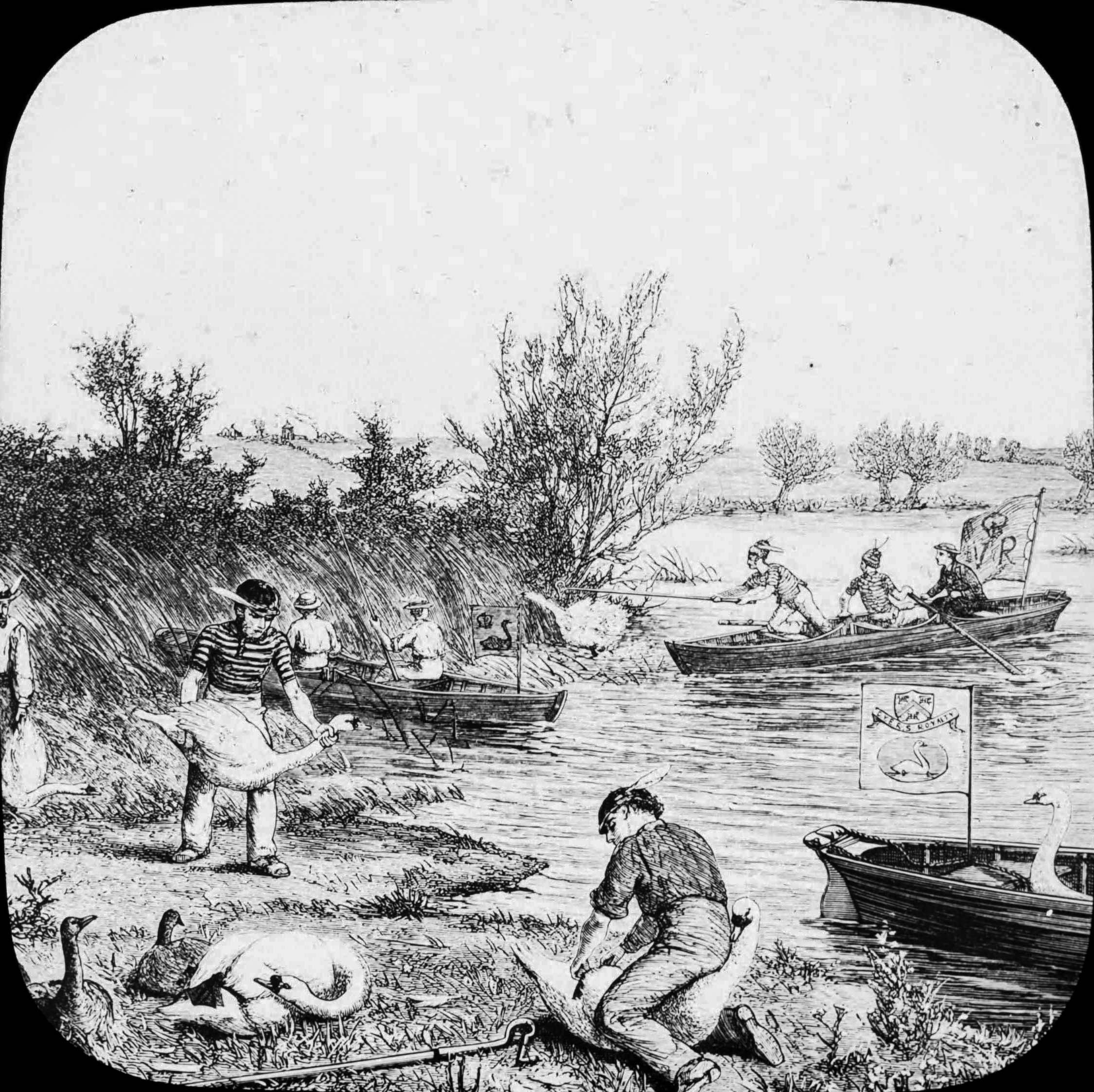
Taunt lantern slide taken from: H.R. Robertson’s Life on the Upper Thames, 1875 - POX0080141

Photograph by Henry Taunt of the 1883 swan-upping at the London Stone in Staines, which marks the boundary of the City of London's jurisdiction over the Thames - POX0090655

Photograph by Henry Taunt of the 1883 swan-upping at Bell Weir Lock in Egham. Wooden skiffs carry members of the Vintners’ and Dyers’ Companies, led by The Queen’s Swan Marker - POX0090618
2020 is the first year where there was known to be a complete cancellation in the 900 years of the swan upping ceremony.
In 1852, John Pollicutt a 26 year old from Thame was indicted for stealing a tame swan from Baroness Wenman of Thame Park on the 26th September. He was tried and found guilty in Oxford at the Michaelmas County Quarter Sessions and it is all recorded in the Quarter Sessions collection held at the History Centre.

Indictment of John Pollicutt, 1852 - QS1852/4/L4/11
It was alleged that Pollicutt drove the swan to the cow barn at Grange Farm where he had been employed as a cowman and killed it by throwing stones at it, then hid the body under some hay. He later sold it to a currier who also stuffed birds. Depositions were taken for the prosecution from 19 year old Richard Chowne, who also worked at Grange Farm, Mr Tomkins the farmer, James Mumford, a Game Keeper at Thame Park who recognised the bird as being one he had himself pinioned and Mr Johnson, the currier who stuffed the swan.
In his own deposition Pollicutt blamed ‘the boy’, probably Chowne, and claimed that he had found the swan already dead, hidden it in the barn overnight and then planned with ‘the boy’ to sell it and split the proceeds. Pollicutt was undefended at the trial and he was found guilty.

John Pollicutt’s deposition - QS1852/4/L5/9d
His sentence is not detailed in the Quarter Session records but in Jackson’s Oxford Journal of 23rd October, it was reported that he received two months imprisonment.
The Quarter Sessions were effectively the County Court, held before two Justices of the Peace, four times a year at Epiphany, Easter, Trinity and Michaelmas. The Quarter Session records are a large and diverse collection; the earliest surviving records date from 1687 and they continue until 1971, although the Sessions were stripped of many of their powers in 1889 by the establishment of County Councils under the Local Government Act the year before.
Local Government continued to have an interest in swans, though by the 1930’s they were definitely not of particular interest to the County Council’s Local Government, General Purposes and Selection Committee which received a letter in 1934 from the Lord Chamberlain’s Office asking the County Council to consider the practice of pinioning swans on all public water within the council’s jurisdiction as a method of restricting their numbers.
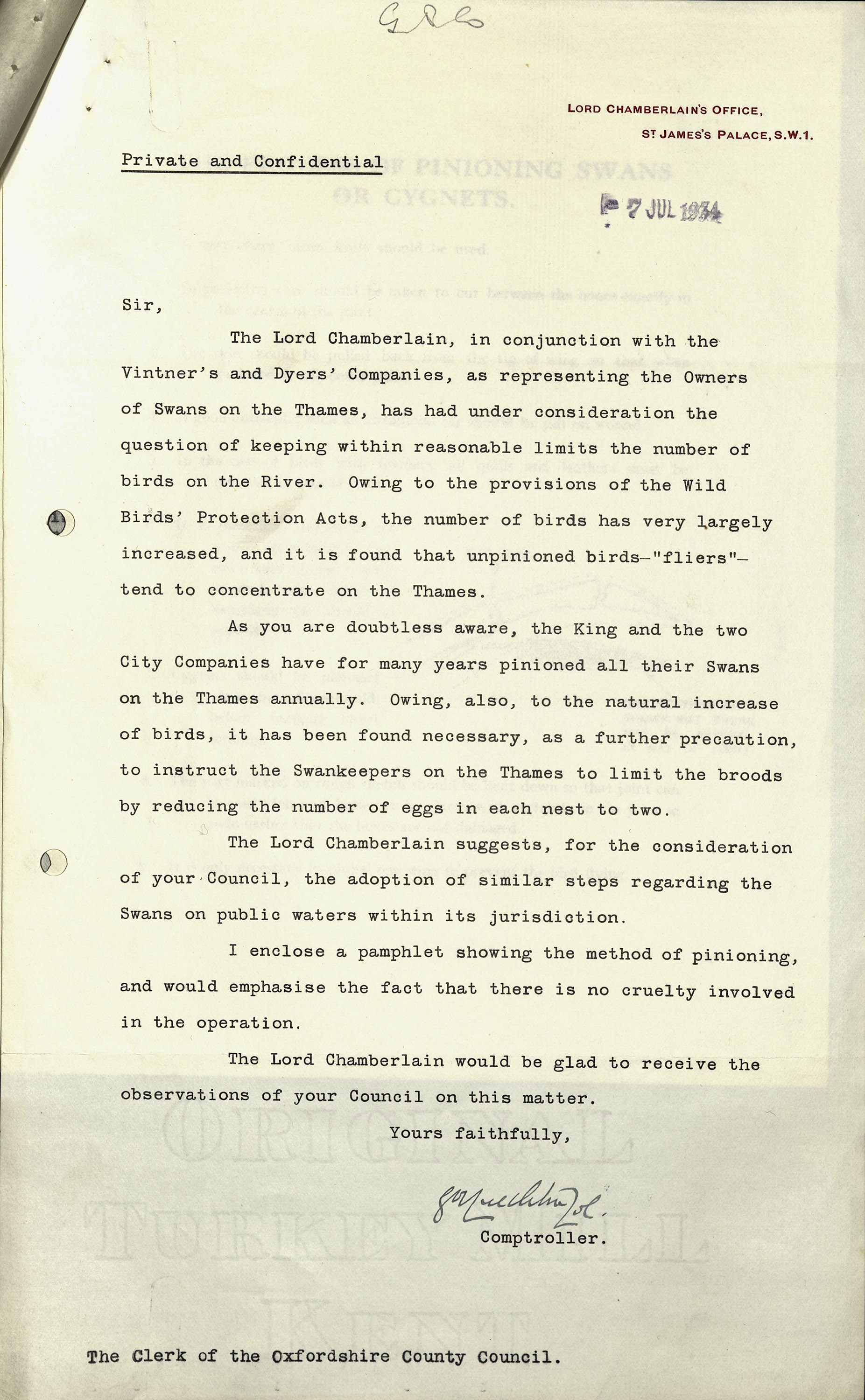

Letter from the Comptroller of the Household to Oxfordshire County Council, 1934 - CC3/4/C36/2
As can be seen from the reply below, the Clerk to the County Council essentially pushed the matter straight back to the Lord Chamberlain’s Office by informing them that all the rivers in Oxfordshire drain into the Thames and were therefore counted as part of the Thames Conservancy and as such, came under the jurisdiction of the Lord Chamberlain’s Office itself.

Reply from the Clerk of Oxfordshire County Council to the Lord Chamberlain’s Office, 1934 - CC3/4/C36/2
However, the Clerk did put the issue to the next meeting of the General Purposes and Selection Committee four days later. Unsurprisingly, the committee agreed with the Clerk. In these days of emails, WhatsApp and Microsoft Teams, the formality of the correspondence is a reminder of a bygone era where nobody would ever dream of signing off a letter with a kiss or even just ‘best wishes’.

Minutes of Oxfordshire County Council General Purposes and Selection Committee - CC1/24/A1
This committee had 6 members plus the chairman who was also the Chairman of the County Council. Between 1934 and 1939 this was William MacNamara Goodenough, who was later knighted and became Chairman of Barclay’s bank. Other topics discussed at that meeting in July 1934 ranged from Henley Rural District Parish Boundaries, to the provision of remand homes under the Children and Young Persons Act 1933 as well as the sewers in the environs of Caversham.
Oxfordshire History Centre holds the archives of its parent body, Oxfordshire County Council, and has a statutory responsibility for the care of and provision of public access to these records.
Swans are, of course, very beautiful birds (providing you don’t get too close!) and over the centuries they have inspired many works of art.

Woodcut swan from title page verso of John Leland's Cygnea cantio, 1545 - SV 821.2(LEL)
These pages with their beautiful woodcut illustrations are contained in a small but precious, limp vellum binding, Cygnea cantio. Published in 1545, it is the oldest printed volume in the History Centre local studies collection. The author, John Leland was an English poet, antiquary and one of King Henry VIII’s chaplains. He had several connections to Oxfordshire; he lived in London but in the 1520’s he was a fellow of All Souls College and in the 1540’s he held the rectory of Great Haseley before also being given a canonry at what is now Christ Church.
This volume of poetry was one of his most notable works. Dedicated to Henry VIII, it is long a river poem in his praise, told in the voice of a swan swimming down river from Oxford to Greenwich. Bound in with the poem is a commentary in prose, with many topographical and place name references.
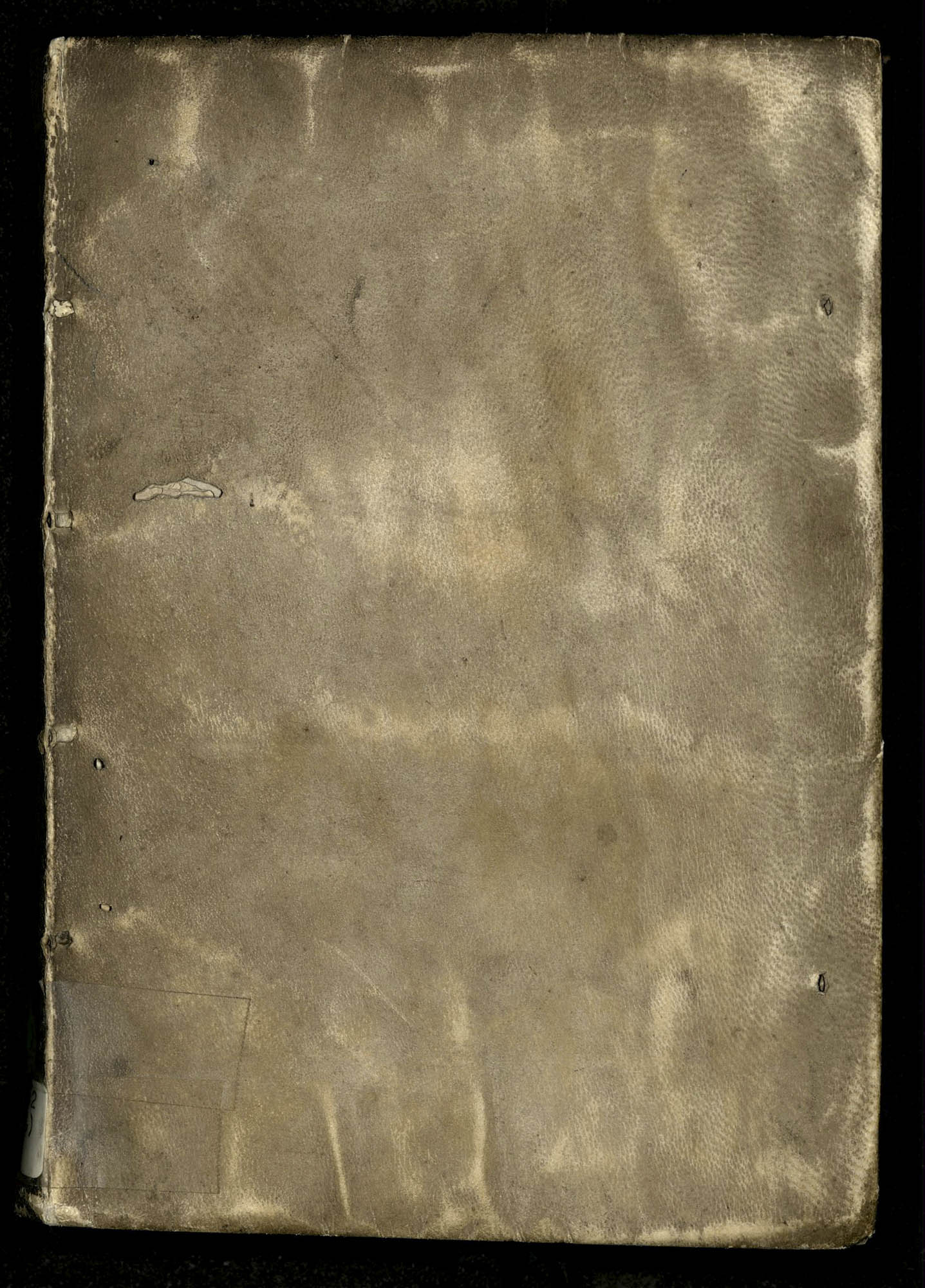
Vellum cover to John Leland's Cygnea cantio, 1545 - SV 821.2(LEL)
A limp vellum binding is a very practical one as well as economical; it is a binding style where the quires are sewn together onto a support such as cord or, as in this case, alum-tawed leather thongs (a strong, white leather made by tanning using aluminium salts) but the spine is not glued and the cover is made from a single piece of folded vellum and not using heavy board. The text block is attached by lacing the thongs into the cover. Very little adhesive is used and vellum is naturally very tough despite being beautiful to look at and smooth to touch.
When the River Arno flooded Florence in 1966 destroying millions of artworks and rare books, the volumes that withstood their soaking the best were discovered to be the limp vellum ones where the lack of heavy boards and glued spines caused much less distortion to the textblocks.

Inside vellum cover to John Leland's Cygnea cantio, 1545 - SV 821.2(LEL)
The binding structure is visible along the joint
Perhaps one of the most famous artistic expressions of a swan is the ballet ‘Swan Lake’. London City Ballet performed this at the Oxford Playhouse Theatre in 1983.
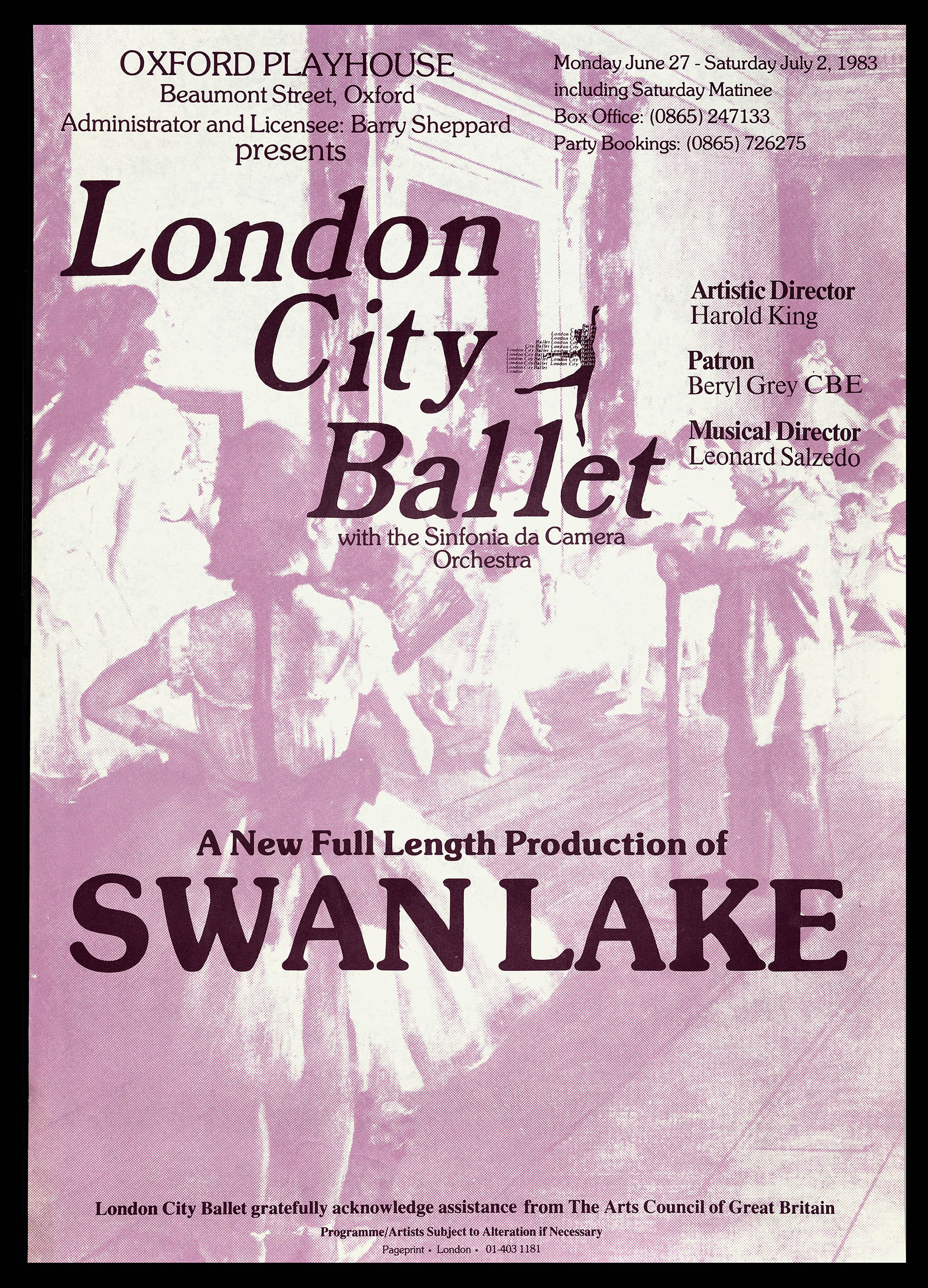
Poster for Swan Lake production by London City Ballet, 1983 - O24/6/N2/32/15
In 1971, the composer and singer, musician and entertainer Donald Swann performed his autobiographical show ‘The Space Between the Bars’ at The Playhouse.
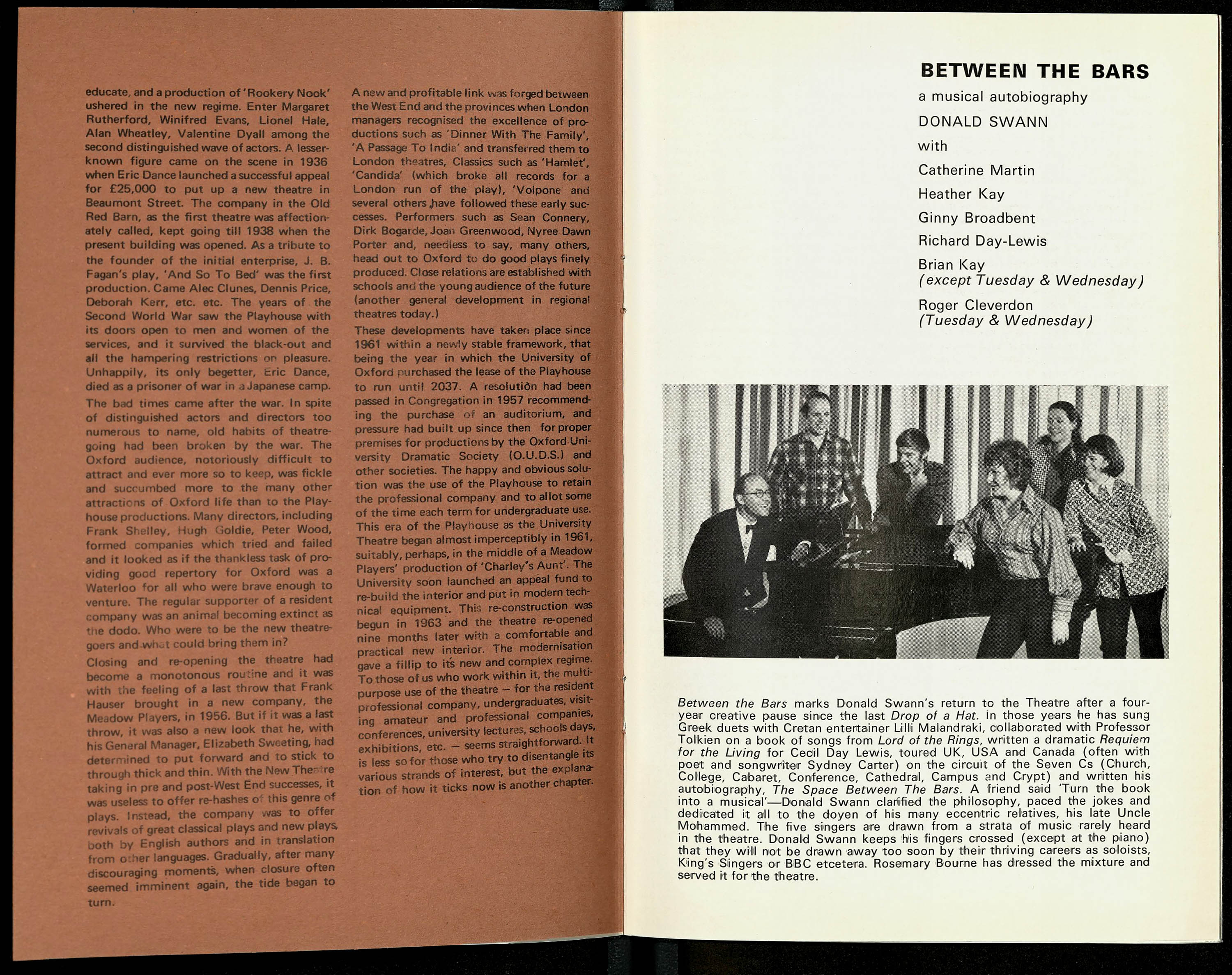
Programme for ‘Between The Bars’ by Donald Swann, 1971 - O24/6/N1/49/15
Swann was most famous for his partnership with Michael Flanders which started in 1948 and lasted until the late 60’s but he was also a prolific composer of operas, songs and music in his own right. His performance at the Playhouse in 1971 wasn’t his only connection with Oxford; born in Llanelli, he read modern languages at Christ Church College in Oxford until the second world war interrupted. A conscientious objector, he served with the Friends’ Ambulance Unit in Egypt, Palestine and Greece before returning to Christ Church after the war to complete his degree.
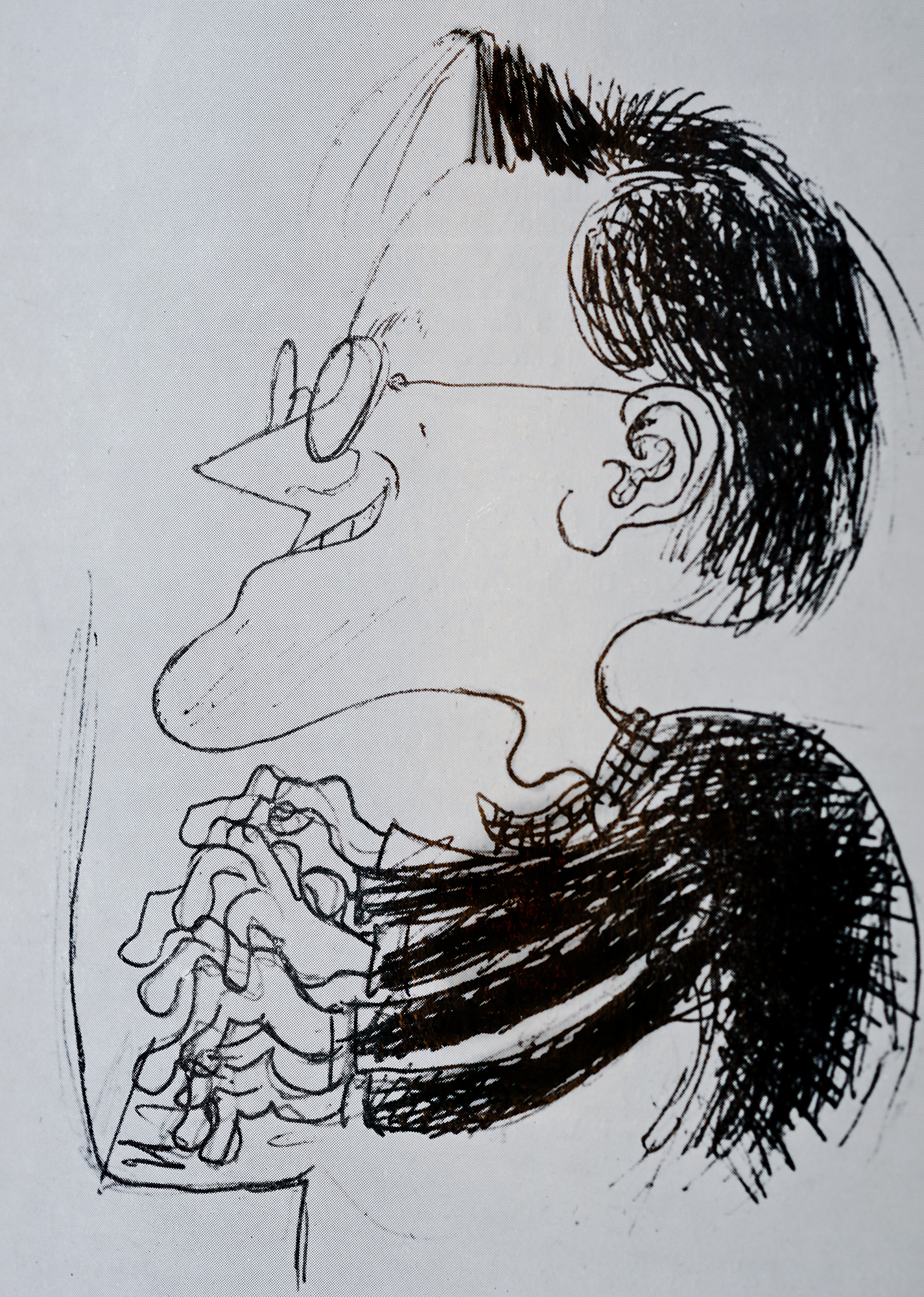
Cartoon of Donald Swann - O24/6/N1/49/15
The Oxford Playhouse was first opened in 1923 in Woodstock but finally opened in its present Beaumont Street home in 1938. It has had an eventful history, closing more than once due to lack of funding and at one period, it was the official University Theatre. It reopened in 1991 and has remained a much- loved Oxford organisation since.
The archive was first deposited with the History Centre archive collections in 1993 and has been added to ever since. As well as a sizeable publicity collection of programmes, posters and photographs, there are management, administration and financial records as well as material relating to other organisations who used the Playhouse such as the Oxford University Dramatic Society.
Not surprisingly for a county with the River Thames running through it, the swan is the inspiration for many hostelries. The History Centre archive collections include several local breweries: Brakespeare’s, Hall’s and Morrell’s and a look through Picture Oxon will uncover photographs of many ‘Swans’ around the county; inns, hotels, pubs and restaurants.
Visitors to the History Centre arriving by bus might ask the driver to put them off at ‘the Swan’ because it is just across the road. Properly called The Original Swan it is pictured here below in 1941. Apart from the blackout paint on the kerbs and edges of the building and the rather more ornate windows, it looks much the same as it does now. The pub today is owned by Arkells but in 1941 it belonged to Hall’s Oxford Brewery.
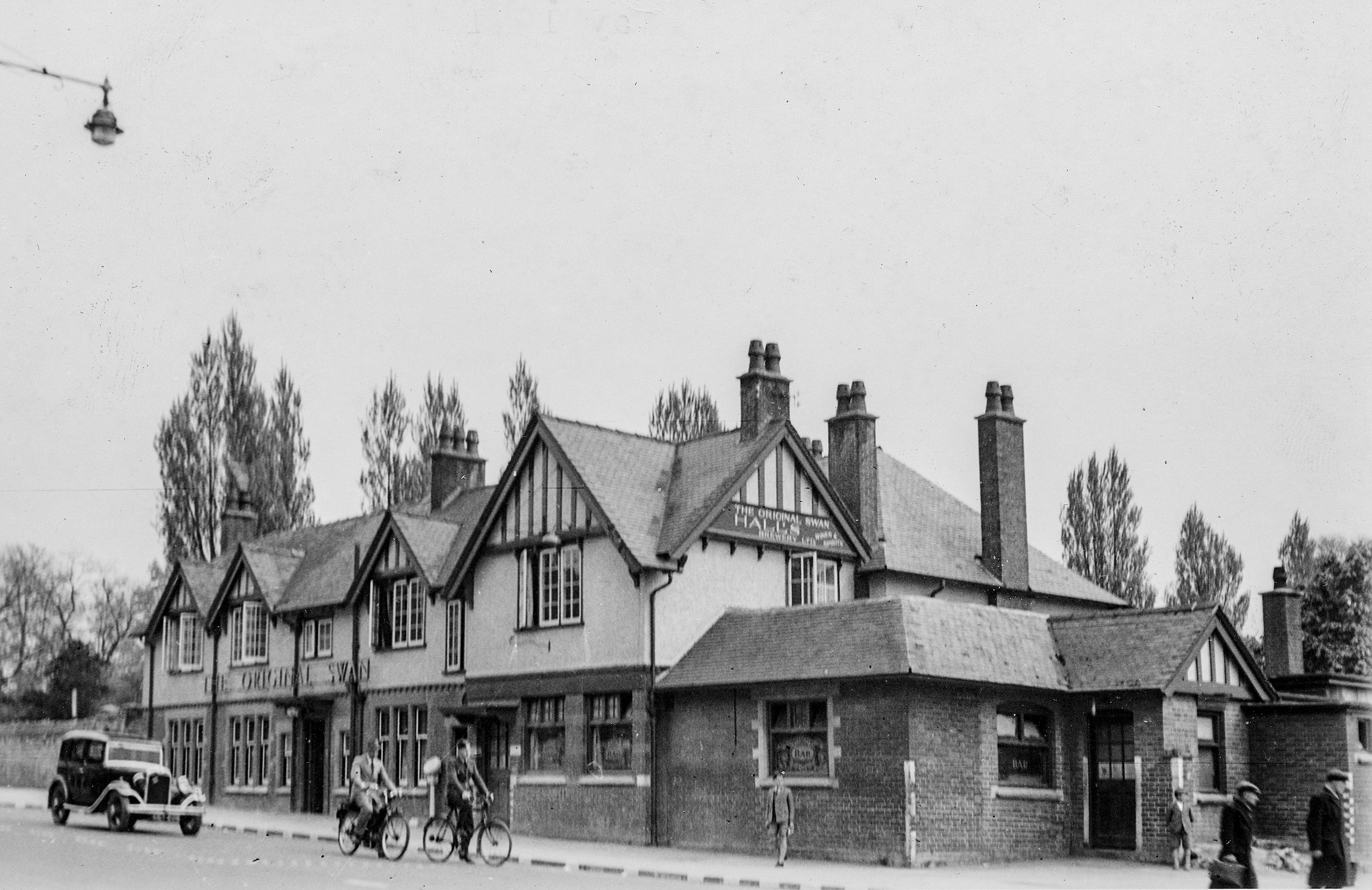
The Original Swan public house, Cowley, 1941 - POX0250781
A more rural Swan is that found in Swinbrook, on the banks of the River Windrush seen here in the 1920s in a picture from the Packer Collection of photographs.
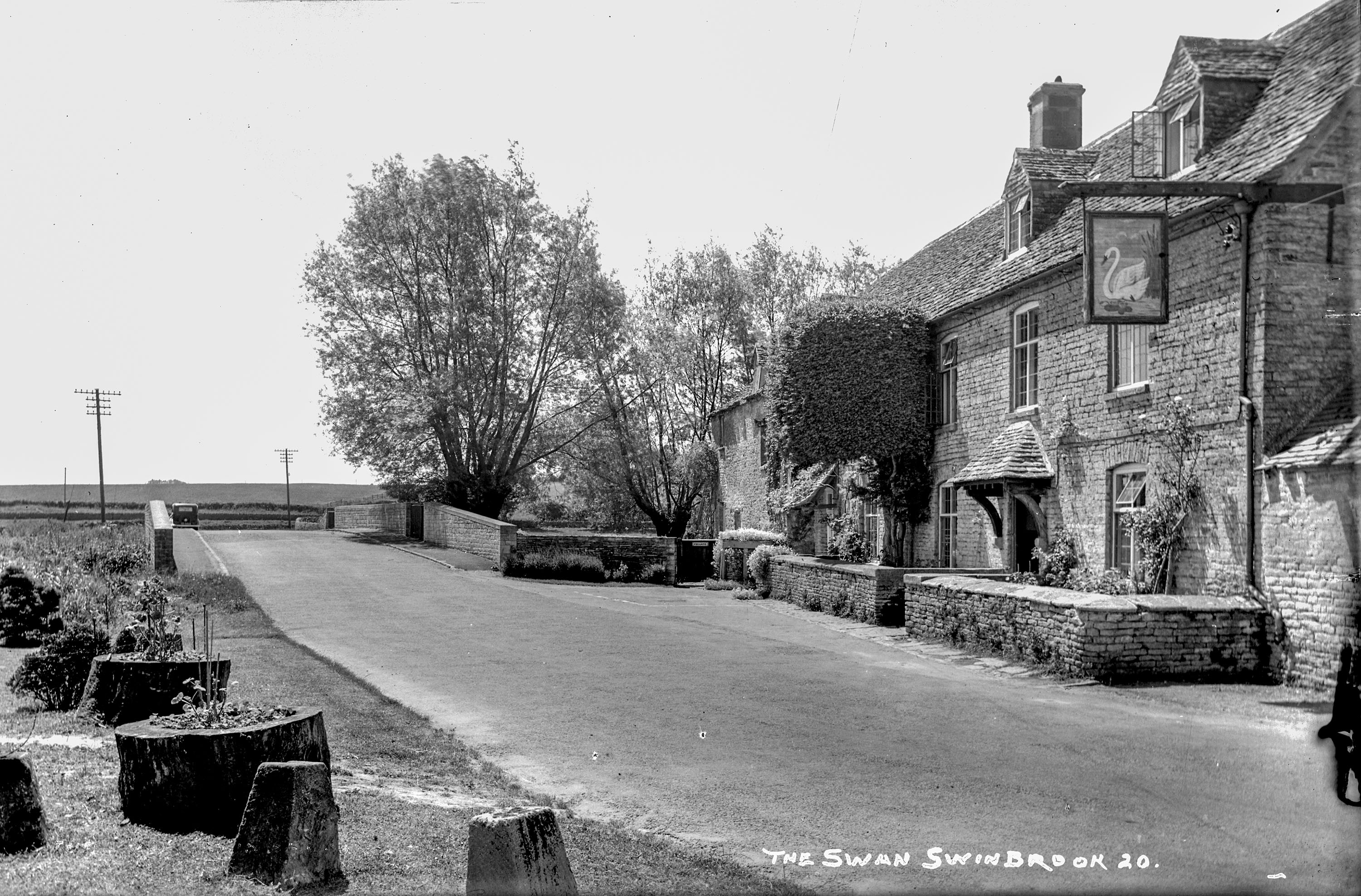
The Swan public house, Swinbrook, 1920s - POX0169395
The Packer collection is a major photographic collection held at the History Centre and contains photographs taken by Chipping Norton photographers Frank and Basil Packer, Percy Simms and the Antona studio. The collection covers North and West Oxfordshire, the Cotswolds and the Vale of the White Horse from the 1910s to the 1970s. Much of it is digitised and can be seen online at Picture Oxon.
The Duchess of Devonshire, one of the famous Mitford Girls remembers the Swan from this time in her memoir Wait for Me where she describes it as having “sawdust on the stone floor of the pub and a charming curved settle in the parlour”. In a letter written to her cousin, Madeau Stewart, in 1984 she asks her to draw the settle for her and describes its location in the pub. At one time, the Duchess owned the pub and these days, you’re more likely to find a Prime Minister or President there than sawdust on the floor.

Letter from the Duchess of Devonshire to Madeau Stewart, 1984 - P143/12/C2/033
Madeau Stewart, a resident of Burford, was an archives feature producer for the BBC and deposited her collection of personal papers to the History Centre in the 1990s. As well as her personal diaries, notebooks and sketchbooks it contains her correspondence with many notable figures: not only the Duchess of Devonshire but author Elizabeth Goudge, composer Elizabeth Poston and the poet Stevie Smith, amongst others.
_shillingford.jpg)
E.W. Haslehurst, Shillingford Bridge, 1906 - SZ 931(JER)
This illustration of the Shillingford Bridge is taken from the 1906 book, The Silvery Thames, written by Walter Jerrold and beautifully illustrated by Ernest W Haslehust, a prolific landscape painter who, with Jerrold and other writers produced a great number of British travel books.
In this painting we can just make out that the building at the bridge is called the Swan Hotel but in the postcard below we can see that by the 1950’s this same building, though enlarged was known rather more prosaically as the Shillingford Bridge Hotel.

Postcard from the Shillingford Bridge Hotel, c. 1951 - P314/PR/1
One Swan that has (just about) managed to hang on to its name is ‘Ye Olde Swan’ at Radcot although it has clearly not always been able to hang onto its furniture as advertised by the sale poster below. It’s interesting to compare the items for sale in 1919 with the facilities available at the pub today: there are no longer hotel rooms, but their website offers glamping on the riverbanks and there are still river trips to be had.

Swan Hotel, Radcot - sale of contents (poster, 1919) - Pocock I/88

Henry Taunt's photograph of the Swan Hotel, Radcot, 1903 - POX0118780

The Swan at Radcot, in 2020
It is to be hoped that in the year to come we will be able to inspect these particular swans in person, once lockdown is a thing of the past.
Posted by: Rosemary Hamilton, Conservation Manager, Oxfordshire History Centre