South Newington Register of baptisms, marriages and burials, PAR180/1/R1/1
13 December 2023
South Newington Register of baptisms, marriages and burials, PAR180/1/R1/1
This second blog post covers the history of parish registers, showing how different record keeping practices developed and the impact that has on the surviving records, and uses examples from some of our registers. For information about what registers Oxfordshire History Centre holds and how they can be accessed please see part one.
Parish registers owe their existence to Thomas Cromwell, who as Vicar General mandated from 5th September 1538 that every parish in the country must keep a register of baptisms, marriages and burials. It was thought Cromwell got the idea from his visits to Europe where the keeping of registers was common practice. The earliest register for Horley contains a title page that recites Cromwell’s mandate almost word for word.

Thomas Cromwell’s mandate from Horley, PAR138/1/R1/1
The idea was not widely taken up at first. There were fears the information would lead to further taxation and the order had to be reissued in 1547 and 1559. This is one reason why so few registers survive from 1538, out of all our registers only 13 have entries dating from then. Another reason was the record keeping practices used by the vicars. Many used cheap paper that did not last, so entries were either lost or gathered up later to be copied into a more robust volume. In 1597, the Convocation of Canterbury ordered that registers be kept on parchment rather than paper and in 1603 it became Canon Law to recopy old registers dating back to 1558 or 1538 if the incumbent preferred. An example of recopying in our collections is the first South Newington register. Though this has entries dating to 1538, they were only added in 1578 when the register was bought. It is clear that when dealing with entries from the 1500’s care needs to be taken to understand missing entries and potential original transcription errors.
1597 also saw the introduction of Bishops transcripts. These were copies of the registers that were sent annually to the bishop, their purpose to ensure the records were properly kept and that there were no fraudulent entries. However, they could often be copied by a different person and not everything might be reported back to the bishop if it brought an unwelcome insight into the life of the parish. For example illegitimate births might not be recorded in the transcripts. Bishops transcripts for Oxfordshire date from 1637 and can be a valuable resource to fill in gaps where parish registers might not survive. The Oxfordshire Family History Society transcribed all Bishops transcripts where gaps in the original registers were known, so if you have ever used their transcripts, then you will have checked these records too. The original Bishops transcripts form part of our Diocesan collection and can be found online here DIOC/1/E/7.
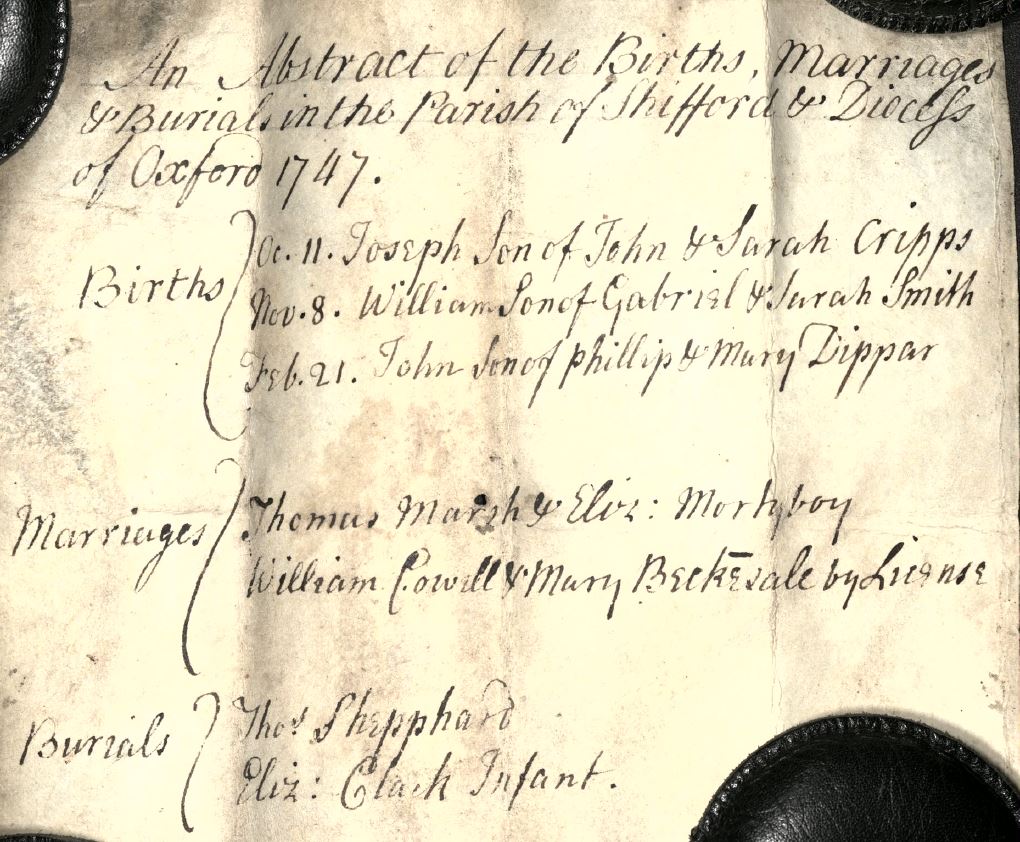
Bishops transcript for Shifford 1747, DIOC/1/E/7/A/312
The issues of religious supremacy and reform that marked the English Civil Wars also had an impact on parish record keeping. The 1643 Solemn League and Covenant led to many incumbents being removed for failing to take the covenant and record keeping left in disarray. In 1645 the Puritan Directory ‘restored’ parish registers and asked for more information to be recorded, including dates of birth, and dates of death. Further changes came in 1646 when bishops were abolished.
With the ending of the Wars, the 1653 Barebones Parliament made the keeping of the registers a civil matter. Now an individual was elected for 3 years by parishioners who would be responsible for keeping and maintaining the records. The Marriage Act 1653 made marriage a civil act to be performed by a Justice of the Peace and by banns only and a fee if 1s was imposed for the recording of entries.
The register for Albury was started in 1653 by Richard Coxhead. The title page shows his election to the position and the signatures of the witnesses, but it is interesting to note this register is not just for Albury, but also includes Holton and Waterperry. It is always worth looking elsewhere as people may not be where you expect them.

Title page of Albury register, PAR4/1/R1/1
This all means that survival for records in the Commonwealth period can be very haphazard and dependant on local decisions. In a parish where a vicar or other church official may have been elected to keep the records, then the recording probably continued with little issue. However, in other places either no entries were recorded, or were kept in separate registers which have not survived.
With the restoration of the monarchy in 1660 all decisions made by the Commonwealth government since 1642 were declared invalid and returned parish registers back to the care of the clergy. An Act of Parliament was also passed to legalise marriages made in this period to insure all children were legitimate. In many cases children who had not been baptised as infants, were now baptised.
In 1666 an Act was introduced that required the dead, except plague victims and the destitute to be buried in an English woollen shroud. The primary reason for this was to maintain the supply of domestically produced wool against that of the continent. The second act in 1678 sought also to reduce linen imports. The law was generally ignored from the 1770s and repealed in 1814. One of the features of the act was that relatives had to a swear an affidavit to confirm the burial had been in woollen or otherwise face a fine of £5. Records of these affidavits were often also recorded in the parish registers. In some places, such as Waterperry, a new register was acquired. This register contains a copy of the printed act and more detailed burial entries than previously recorded.
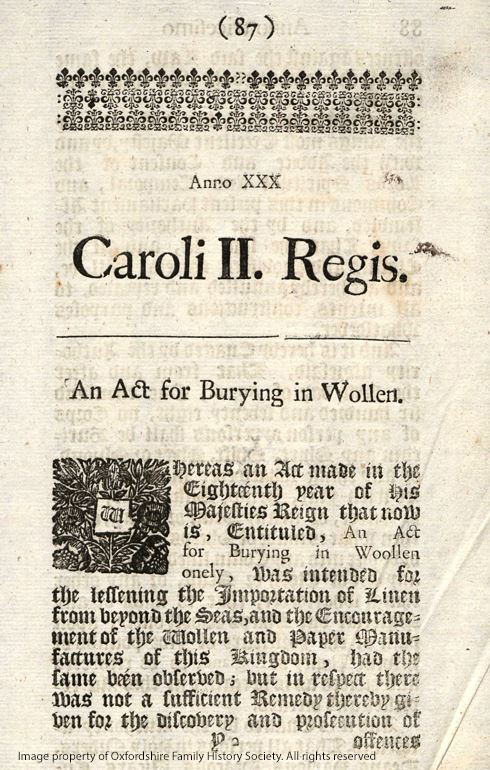
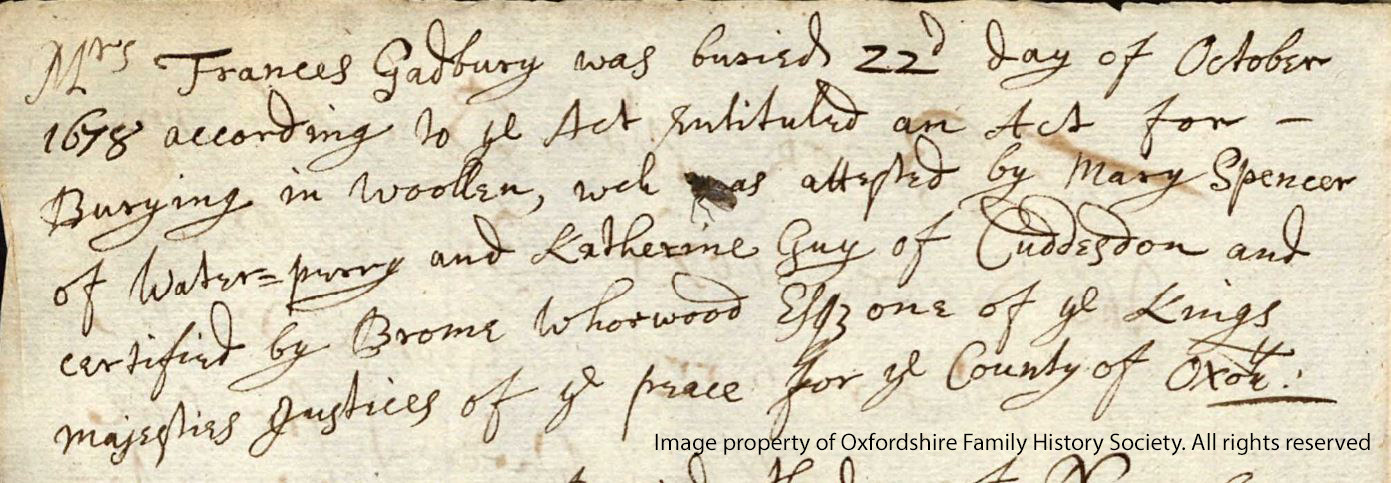
Details regarding burial in woollen from the Waterperry register, PAR277/1/R1/2
In the later part of the 17th century more children were being baptised by dissenting ministers (who didn’t conform to the Church of England) and so were not recorded in the registers. To avoid this a law was passed in 1694 that made it compulsory to notify the Anglican clergy of any birth under penalty of a fine. The law also introduced a tax plus a fee of 6d to register baptisms and burials and from 1698-1703 a charge of 2s 6d to register marriages.
Though this practice was short-lived a similar payment was again introduced with the Stamp Duty Act. Between 1783 and 1794 a tax of 3d was levied on each entry in the parish register with a fine of £5. It was unpopular as the clergy didn’t wish to be seen as tax collectors, but paupers were exempt from payment. Therefore, in many registers of this date you see entries annotated with the letter P for pauper, which enabled many to avoid payment. The register from North Aston shows those who were paupers and those who paid.

Entries from North Aston register showing paupers and those who had paid the stamp duty, PAR11/1/R1/3
A combination of the introduction of these taxes, plus that fact that marriage by affirmation before witnesses without ecclesiastical rites was valid in law, saw the rise of clandestine marriages that were not recorded in the registers. This led to Lord Hardwicke’s Act of 1753, that thoroughly reformed marriage practices including record keeping. The act set out that only marriage performed in a licensed building was legal, which though Quakers and Jews were exempt, it effectively meant an Anglican church. Therefore, you may find known non-conformist ancestors in these records, as they had no other choice. Couples were also no longer free to marry in any church, but now had to marry in the home parish of one of the parties. These marriages were by banns and saw the first regular recording of banns in registers. Couples wishing to marry elsewhere had to first obtain a licence. A marriage was not considered valid without either a licence or the reading of banns.
In record keeping terms Hardwicke also decided that separate marriage registers should be kept and what information should be recorded. From this point registers were produced that contained instructions and pre-printed entries to record this information, which included the marital status and place of residence of both parties. The entry was also signed by both parties, two witnesses and the officiating clergyman and stated if the marriages was by banns or licence.

Example of instructions, Rotherfield Peppard PAR225/1/R3/1
Changes to this system came with Civil Registration in 1837, when additional information was required. Now both parties had to provide their occupation and address at the time of marriage, as well as the name and occupation of their fathers. Where there was illegitimacy, the name of the father might be missing, but it can sometimes be included thus revealing information that may have been hard to discover elsewhere.

Marriage of William Morris and Lizzie Anstey, PAR203/1/R3/8
The Civil Partnerships, Marriages and Deaths (Registration) Act 2019 which came into force on 4th May 2021 saw the implementation of recording marriages electronically and therefore the end to the traditional marriage register. However, some churches have continued to keep their own records of the marriages performed in their building.
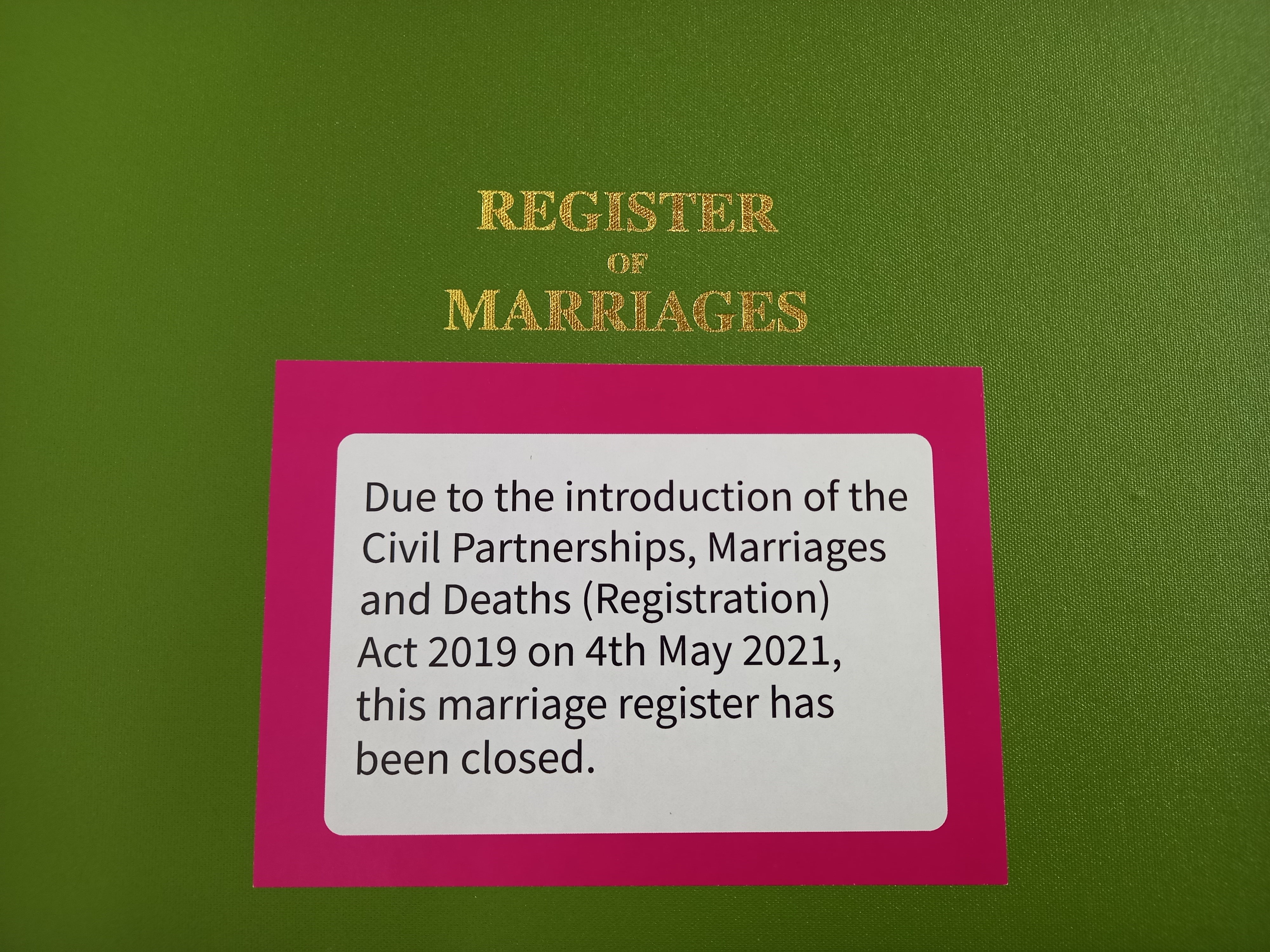
Wheatley marriage register, Acc 7022
The history of the reading of banns dates to the Lateran IV Council in 1215 and continued to be followed by the Church of England after the Reformation. The church followed the provisions of the Council of Trent in 1563 that saw the public announcement of banns by parish priests on three consecutive holy days. However, evidence of banns is much rarer than marriages, as not all were recorded and not everyone was married by banns. This example from Chastleton dates to 1699-1710 is a rare survivor and only covers a small period in compared to the marriages.

Banns entry from Chastleton, PAR60/1/R1/1
Lord Hardwicke’s act clarified this practice further, requiring banns to be read aloud on three Sundays before the wedding in both the parties home parishes. From 1754 Banns entries could either be found in the same register as marriages, or in a separate register. From 1813 they can be found in their own register.
Of the four types of parish register, Banns registers are the most inconsistent. In some parishes, registers may not have survived at all, and there can be large gaps in the sequence. The registers will also not include couples married by licence. Oxford Diocesan and Archdeaconry marriage licences and bonds are held at OHC and the index to the Diocesan marriage bonds 1634-1849 can be searched here. Licences sometimes survive among parish collections.
The next piece of legislation to involve parish registers was Sir George Rose’s Act of 1812, for better regulating and preserving parish registers. Between 1754 and 1812 baptism and burial often continued to be recorded together in the same register, but from 1812 for the first time it was decreed that separate register must be kept.
Baptism registers are one of the most consistent types of register, always recording the date of baptism, the name of the child and the father’s name. The mother’s name does not always appear in earlier registers, but later becomes universal and the father’s occupation and place of abode is not always given. Some registers provide dates of birth, but this is often only because the vicar has decided to include them as a marginal note.
The 1812 Act saw the introduction, just like that for marriages, of a pre-printed register. The example from the new Bix baptism register, shows all the necessary information that was required.

Bix baptism register, PAR33/1/A2/1
Burial registers sometimes record the barest information of all registers. Pre-1812 registers often only told you the date of burial, making it difficult to differentiate between people of the same name across generations, though an entry often states if the burial was of a child. However, they can sometimes reveal interesting details about the death, especially if it was unusual, such as the deaths of James Hewett and Sarah Drew who were struck by lightning in Stanton Harcourt in 1718.
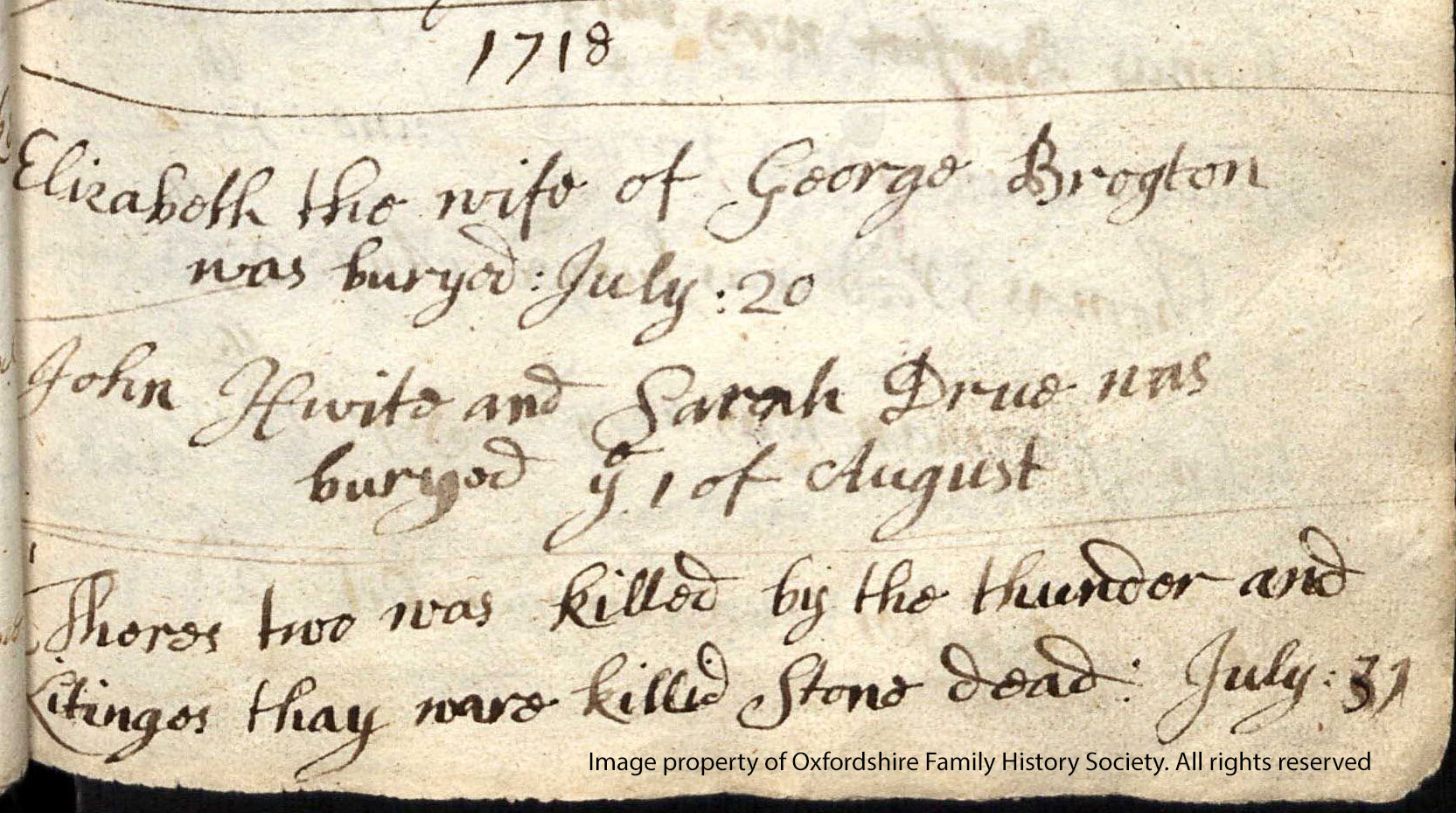
Stanton Harcourt burial register, Par.Stanton Harcourt b.2
They can also offer evidence of life and living conditions, by the nature of death. Plague and other epidemics are often noted and the registers for Oxford City during the Civil War show just how many soldiers had lived there.
As with baptism registers, from 1812 burial registers became separate registers with the pre-printed form requirements. This required an age, which can be helpful, but the place of abode was often quite general.
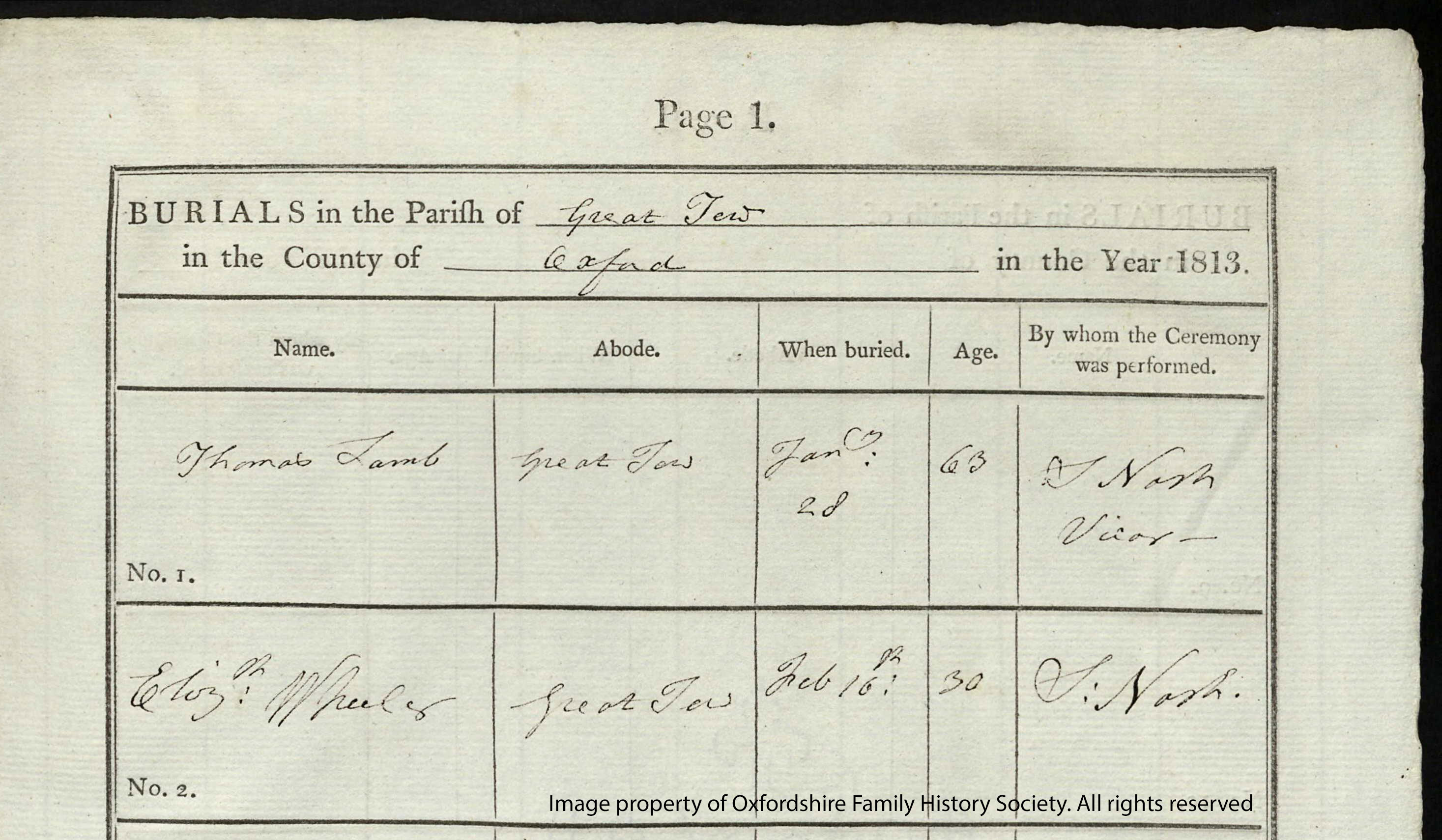
Great Tew burial register, PAR271/1/R5/1
Baptism and burial registers can be a way to identify ethnic minorities in records. The earliest example we have found is a burial at Great Haseley in 1628 for a servant of Mr Edward Wray, MP for Oxfordshire and Groom of the Bedchamber of James I. However, these records can be problematic as often, as in this case, a given name isn’t used and the language used is archaic.
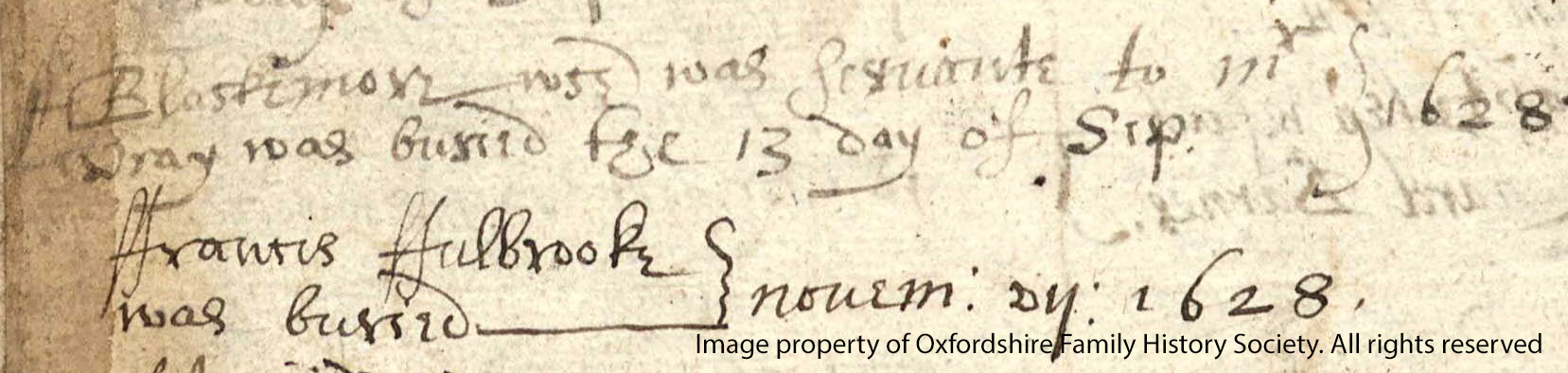
Great Haseley burial register, Par.Great Haseley d.1
As well as the changes to the marriage register, Civil Registration brought changes to where people could be married, providing non-conformists with more options. For the first time any building that was certified as a place of religious worship could be licenced for the solemnisation of marriages. However, the marriage was in reality a civil ceremony as a registrar of marriages had to attend and register the marriage. It was not until The Marriage Act 1898 that the trustees of a registered religious building could appoint their own authorised person to attend and register the marriage.
Registers don’t just contain the expected entries, but also a wealth of other fascinating details. Vicars and rectors often used the empty end papers to record notes, such as historic lists of vicars, often updated by later hands. Some used the registers to record local or national events of significance, such as from 1801, census population figures, or money raised for the rebuilding of St Paul’s Cathedral
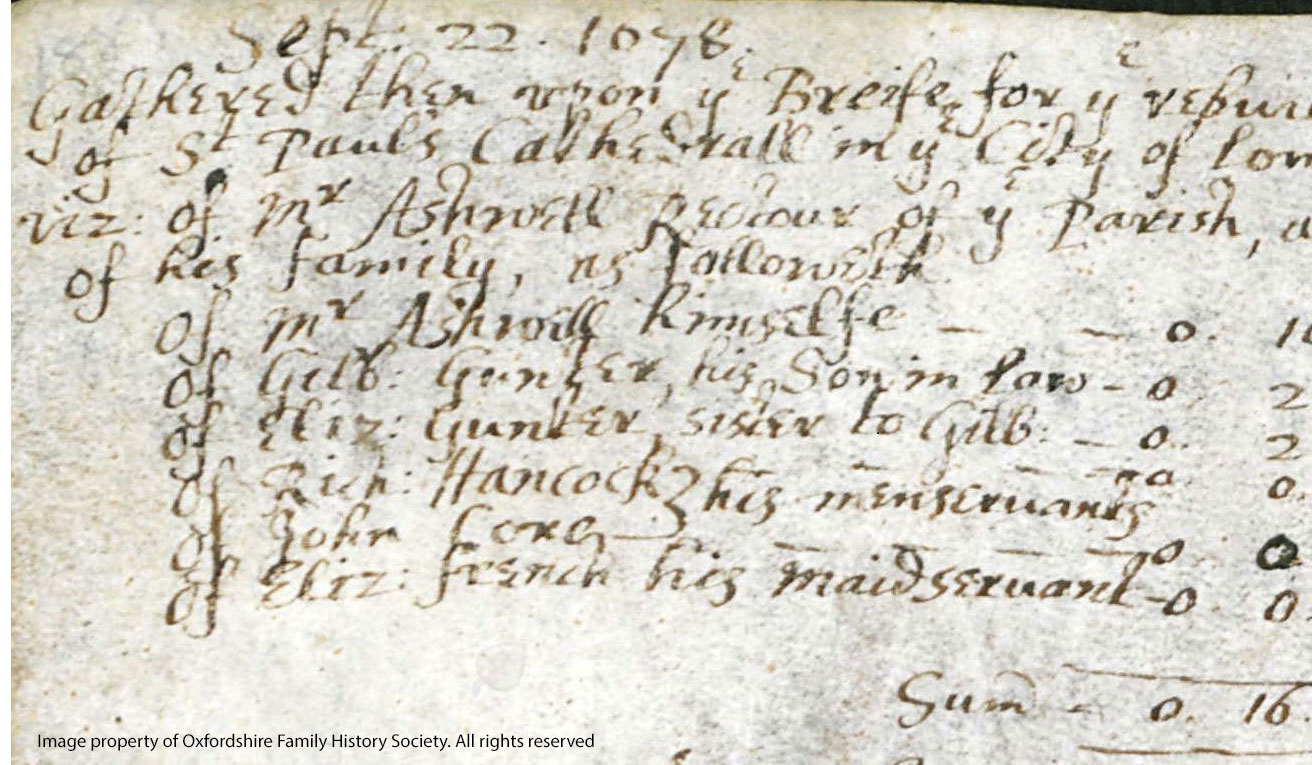
Garsington register, PAR122/1/R1/1
Mentions of the weather, in particular storms are popular and some registers, such as Broughton Poggs, are a chaotic mix of scribbles and details of the reign of King Charles I.
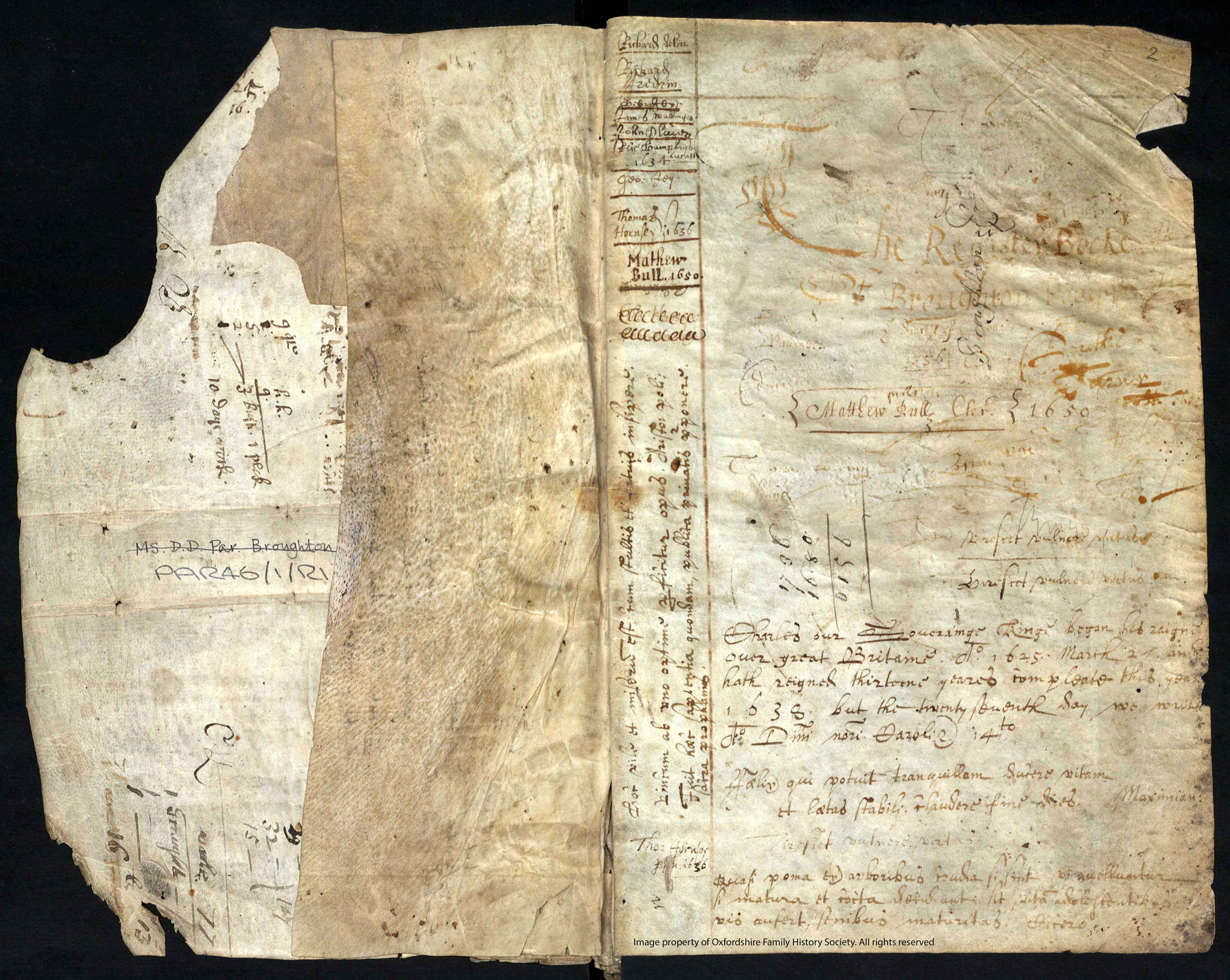
Broughton Poggs register, PAR46/1/R1/1
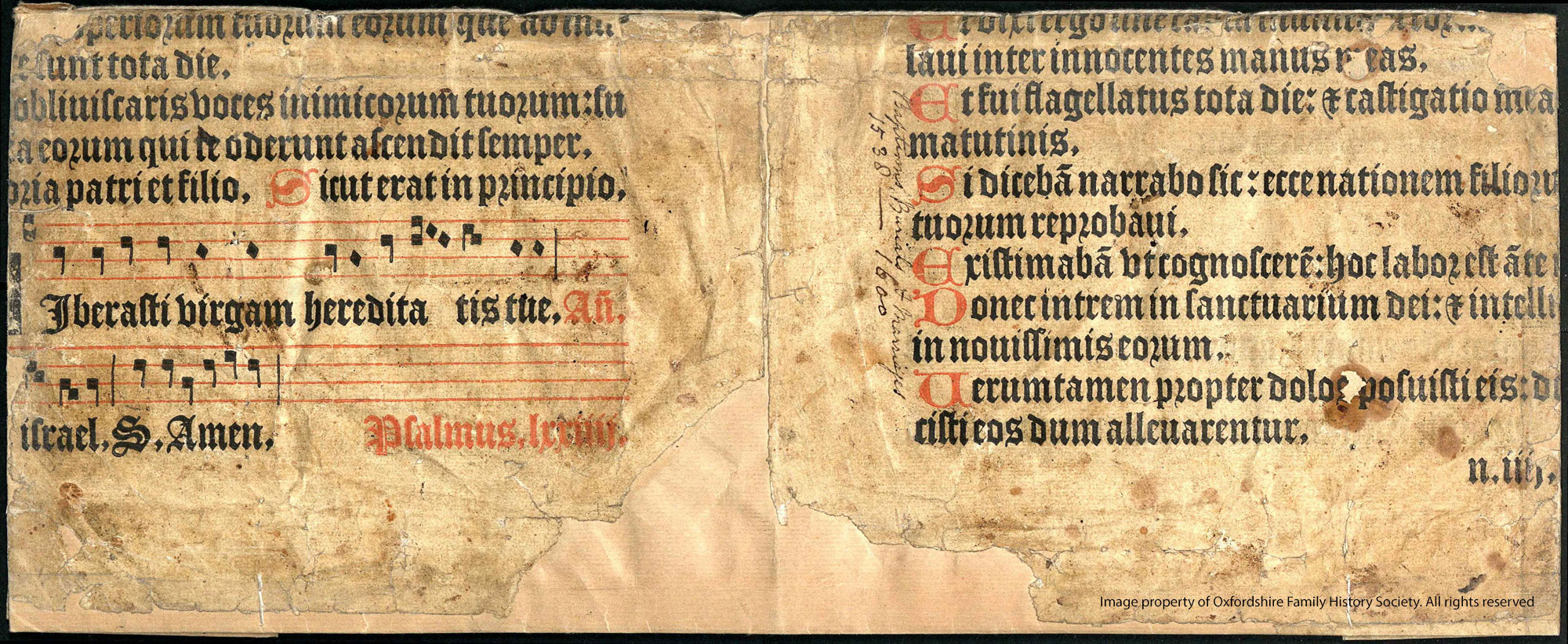
The bindings of the registers can also be unusual. There is a note in the earliest register for Langford to show that it was rebound, with permission, by the Bodleian Library. Whilst the earliest register for South Newington is bound in a piece of a breviary printed by Wolfgang Hopyl of Paris in the early 1500s.
South Newington register cover, PAR1801/1/R1/1
Parish registers are a crucial part of OHC’s holdings, offering access to a rich history of our ancestors and predecessors in the county. We hope these blog posts have helped highlight their importance and will encourage you to keep using them, or maybe return to them in your research.
Posted by: Alison Smith, Archivist