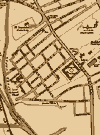
 Further
building took place on the Furse estate, which was laid out in a basic
grid pattern of streets extending about half way down towards the
canal. Oxford University Press bought one block to re-locate its printing
business to Walton Street in 1828. This helped to speed up the building
of Jericho, but the development also owed a lot to immigration from the
surrounding countryside, to a general growth in the local population and
to the demolition of properties in central Oxford.
Progress slowed in the 1830s but Henry Ward laid
out part of Nelson Street for building in 1840 and, after the Jericho
drainage was improved in 1849-50, a new
grid of streets gradually filled the low-lying meadows near the canal.
Further
building took place on the Furse estate, which was laid out in a basic
grid pattern of streets extending about half way down towards the
canal. Oxford University Press bought one block to re-locate its printing
business to Walton Street in 1828. This helped to speed up the building
of Jericho, but the development also owed a lot to immigration from the
surrounding countryside, to a general growth in the local population and
to the demolition of properties in central Oxford.
Progress slowed in the 1830s but Henry Ward laid
out part of Nelson Street for building in 1840 and, after the Jericho
drainage was improved in 1849-50, a new
grid of streets gradually filled the low-lying meadows near the canal.
By the 1860s, inspired by a proposal to build a railway carriage factory in Oxford, St. John's was ready to develop more of its Jericho estate, first in Cranham Street and then in extensions to Richmond Road and Walton Crescent. However there was little demand for new housing and streets such as Juxon Street and Richmond Road were only completed in the 1880s. These later streets are more spacious, reflecting standards imposed by Victorian building bye-laws and a wish to attract tenants who could pay higher rents.
